

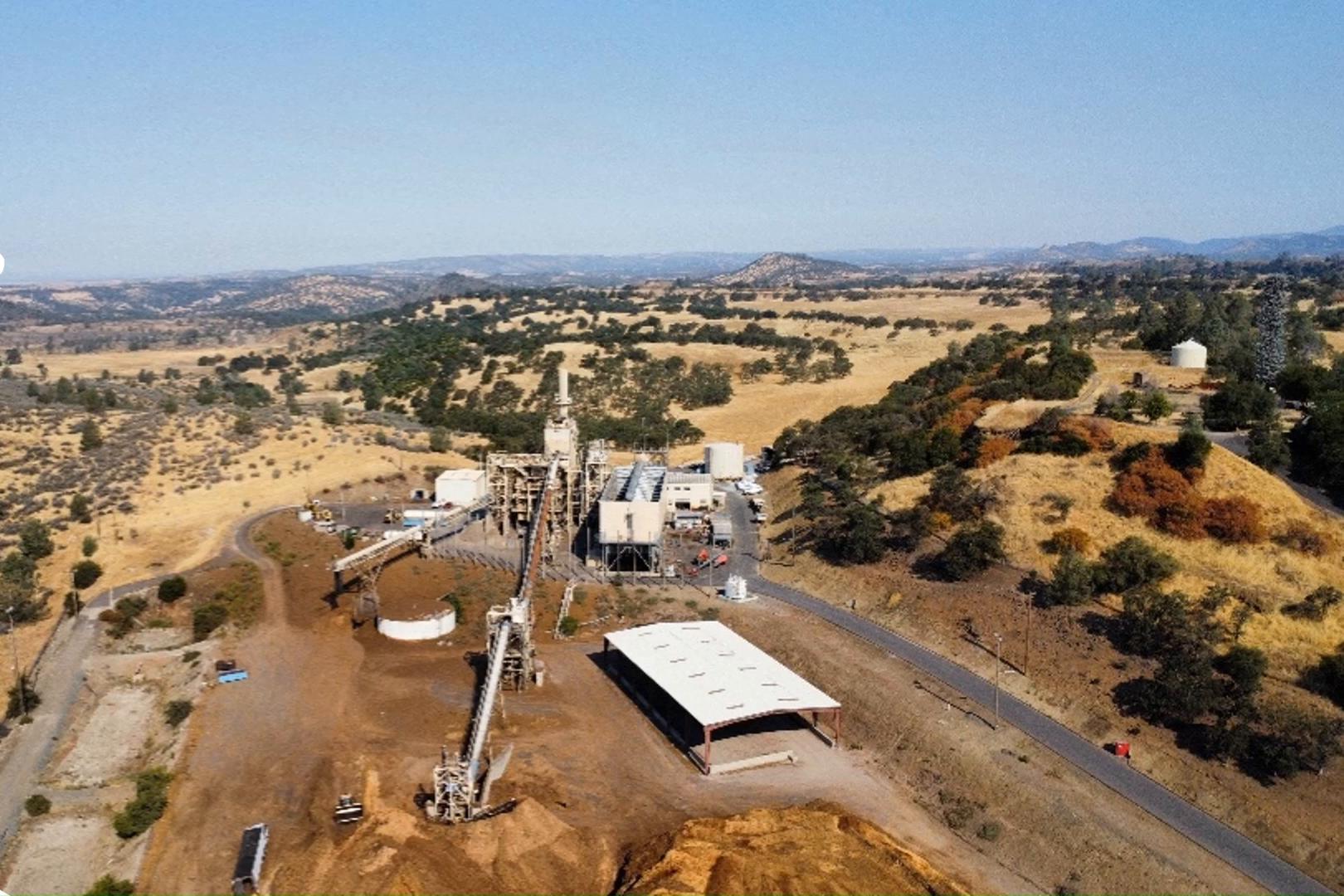
Low carbon to carbon negative. 10–50 MW, around the clock.
Electricity with a choice.
Reliable power for a growing economy. Demand is climbing faster than the grid can add supply. AI inference, data centers, industry and growing communities all need firm power, while interconnection queues and equipment lead times hold new capacity back. SAS builds dispatchable generation right beside the load, so new demand gets dependable supply without waiting on the grid.
SAS is a low-carbon to carbon-negative power provider developing 10–50 MW of dispatchable, 24/7 distributed generation for AI and other near-load demand, fueled by high-hazard forest material and agricultural waste.
Thesis
We stand at the intersection.
AI data centers are running into grid constraints and bottlenecks. California has to pull wildfire fuel out of its forests. Green waste that should never reach a landfill still does. SAS’s mandate is to answer all three at once.
We take high-hazard forest waste and agricultural waste and convert it to 24/7 energy, moving biomass from combustion to low-carbon pyrolysis. The same process produces biochar, which holds carbon in a stable form and generates carbon credits.
Power users deserve a choice in where their electricity comes from and what it does along the way. SAS is building an energy infrastructure platform to make that choice practical: local, dispatchable generation designed alongside storage, grid connections and the customer’s load.
- AI grid bottlenecks
- Wildfire fuel load
- Green waste to landfill
SAS
- 24/7 power
- Biochar
- Carbon credits
Why now
California defined the trend. It will define what comes next.
The next two years will bring the two biggest leaps in renewable energy deployment yet. Over the last two years, renewable energy has made up nearly all of the new generating capacity built in the US, and California has defined that trend. It will define the next chapter too: fully renewable energy that derisks catastrophic wildfire and powers a robust economy.
Inference runs trained models in response to real user and business demand.
SAS’s management thesis is that right-sized, dispatchable distributed projects can serve a useful part of that market when local capacity, customer load, siting and interconnection align.
Resource-led
Starts with what is local
Technology-agnostic
At the platform level
Dispatchable
By design
Public benefit
A wildfire mitigation platform. A landfill-diversion measure.
SAS runs on material California is working to clear from its forests and keep out of its landfills, and every plant puts that material to work for the communities around it.
-

Designated by the California Department of Insurance
A wildfire mitigation platform: projects turn high-hazard forest material into energy before it becomes wildfire fuel.
-
Advancing California’s SB 1383 organic-waste goals
The law calls for a 75% cut in organic waste sent to landfill from 2014 levels. Green and agricultural waste that would otherwise be landfilled becomes SAS feedstock instead.
Additional benefits for host communities.
-
Long-term local jobs
Plant operations, forestry, trucking and maintenance. A representative campus supports about 500 jobs, built with local union labor, local vendors and local subcontractors.
-
Rural and tribal economic development
Partnerships with tribal nations and rural communities keep investment, income and contracts in the places that host the plants, with carbon-credit income reinvested locally.
-
More energy capacity
Each campus adds 10–50 MW of dispatchable, around-the-clock generation where the grid needs it most.
-
Stronger farms, recovering soil
Biochar returns to working land, where it can improve soil structure and water retention, support agricultural production and help depleted soils recover.
Platform
One platform. Multiple pathways.
SAS starts with the site and its needs, then assembles the generation, storage and end-use systems that work together there. There is no universal configuration; there are three ways in.
Biomass conversion is a priority where suitable residual feedstock exists; other technologies join when the site and customer need a different mix.
-
Biomass-led
Dispatchable biomass and useful outputs.
Where residual feedstock and site conditions line up, pyrolysis and gasification deliver electricity, syngas, heat and biochar.
-
Hybrid
Technologies combined around the load.
Biomass paired with microturbines, grid supply or other generation when resource, resilience and customer needs call for the mix.
-
Flexibility
Store, shift and firm.
Batteries and long-duration storage support ramping, dispatch and resilience alongside generation and the grid.
One campus, five assets: energy, waste management, carbon removal, thermal infrastructure and community resilience.
How it works
Designed around the load.
A modular power platform for data centers, industrial users, utilities and host communities, matching local resources, technologies and delivery needs at the project level.
-
Digital infrastructure
AI and data centers
Dependable local capacity, storage and clear power attributes for compute loads.
-
Industry
Industrial users
Dispatchable electricity and heat integration for energy-intensive operations.
-
Public and community
Utilities and host communities
Local capacity, resource stewardship and lasting economic participation.
Resource
Forest, agricultural and wood residuals, plus other local energy inputs.
Conversion
Pyrolysis, gasification and syngas, where technically and commercially suited.
Generation
Dispatchable power built to the load profile the customer needs.
Firming
Batteries, long-duration storage and microturbines add flexibility.
Outputs
Power to the customer or the grid, plus biochar, heat, cooling and carbon value.
Carbon
Low carbon to carbon negative. Measured project by project.
Legacy biomass plants burned their fuel and sold electricity on thin margins. SAS converts it through slow pyrolysis and gasification instead: syngas drives dispatchable power, and much of the carbon stays behind as biochar, a stable product for farms and industry and a source of durable carbon-removal credits.
Each project’s profile depends on its feedstock and conversion, so SAS documents it with lifecycle accounting and independent verification.
| Attribute | Solar and battery | Wind | Natural gas | Biomass pyrolysis |
|---|---|---|---|---|
| Dispatchable 24/7 | No | No | Yes | Yes |
| Energy density and footprint | Low | Low | High | High |
| Carbon footprint | Neutral | Neutral | Positive | Low to negative |
| Resource use | Linear | Linear | Linear | Circular, turns waste into value |
Pyrolysis is the only option here that pairs around-the-clock dispatch with a low-carbon to carbon-negative profile.
- Forest residue
- Conversion
- Syngas to power
- Biochar stored in soil
Feedstock
Traceable source, counterfactual baseline, transport and chain of custody.
Conversion
Conversion performance, auxiliary loads and full process emissions.
Biochar
Quality, stability, end use and carbon storage evidence.
Lifecycle
Lifecycle assessment, monitoring and independent verification.
Approach
What makes each project bankable.
Each project is underwritten on its own, and capital is released only as it meets evidence-based milestones: design package, permits, EPC terms, feedstock, offtake, interconnection, insurance and financing conditions.
Power, biochar, carbon value, heat and cooling may each contribute to a project. They are evaluated as potential value streams, not assumed outcomes.
Site
Secure site position, land use and infrastructure.
Resource
Validate feedstock supply, logistics and operating assumptions.
Engineering
Complete technology, permitting and interconnection diligence.
Offtake
Contract the customer and define measurable power attributes.
Capital
Structure financing, construction and long-term operations.
About
Our mission
Our mission is to develop, build and operate a precedent-setting, globally competitive fleet of advanced low-carbon, net-zero and carbon-negative power generation facilities that deliver baseload power. We also advance wildfire mitigation and divert green waste from landfills.
Origin
Biomass redevelopment and wildfire mitigation
Expansion
A multi-revenue energy campus
Now
A scalable baseload platform for the AI era
What we hold to
- Strengthen energy security
- Live aligned with the earth
- Create long-term local jobs
- Grow tribal and rural economies
- Give back to the community
- Protect worker and community safety
SAS is a Latino-owned company with a diverse management and technical team.
Team
Leadership and project team.
SAS combines institutional capital formation, strategic development partnerships, deep power-sector operating experience, and biomass project execution into one integrated development platform.
-
Tom Soto
Chief Executive Officer
Impact investing pioneer and former Clinton Administration appointee. As a TCW Alternatives managing director, helped scale the platform from $300M to $10.3B. Co-founder emeritus of the LA Cleantech Incubator.
-
Richard Wegman
Chief Financial Officer
More than 50 years of financial and operating leadership across mission-driven platforms, including CFO roles at LACI, with deep governance and capital campaign experience.
-
Ricardo Tejada
Chief Strategy Officer and Managing Director
More than 20 years in technology and infrastructure finance and capital markets. Has structured or arranged more than $3B across 275+ projects globally.
-
Angelina M. Galiteva
Managing Director, Strategy and Partnerships
Clean energy executive and policy leader. CEO of California ARCHES, former CAISO Board Chair and LADWP strategic planning executive.
-
Adam Muston
Project Manager
Twenty years across operations, project management, finance and technical maintenance. Former biomass plant O&M manager who led major fuel conversion and boiler rebuild work.
-
Farley Flores
Senior Associate
Private equity professional supporting capital raising, investor relationships and energy-sector diligence. Economics training from Tufts University.
-
Bart Wood
Outsourced CTO, Bayview Engineers
One of California’s most experienced biomass power-plant builders, operators and innovators.
Investor access
See the platform through a diligence lens.
Materials for investors and strategic partners are shared through a reviewed access process and appropriate confidentiality terms. The request is an inquiry, not a data-room login.